




Find, save and share Public Notices that affect you in the area.
Search the Public Notice Portal What is the Public Notice Portal?What is the Public Notice Portal?
The Public Notice Portal carries statutory public notices published in local newspapers and is the fastest and most effective way of finding out what is happening in YOUR neighbourhood.
Search the Public Notice Portal“There is a real palpable sense that Cornwall has arrived into the lexicon of Westminster and we have done so not as a Dickensian Oliver Twist character but as a region, area, country – choose the word as you feel – that is going to fundamentally spearhead a new exciting economy for the UK.”
Those are the words of John Brown, CEO of Cornwall Chamber of Commerce, who is among local business and political leaders to welcome promises of Government funding for Cornish industry last week, which could be a watershed moment for our county, Duchy, nation … again, choose your favoured word.
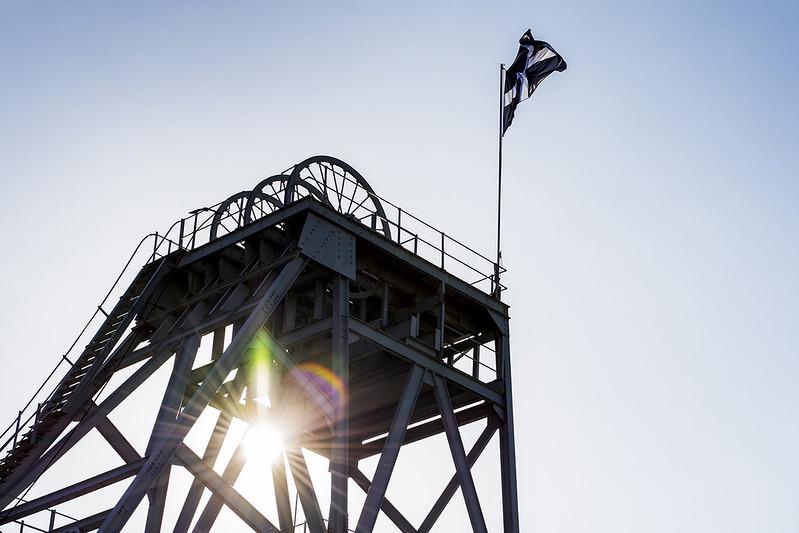
It came at a time when Cornwall also hit the news for seemingly winning in its political fight not to be pulled into a combined mayoral authority with councils in Devon. There was also a real boost for the Cornish language and a Critical Minerals Strategy, which could prove a huge boon for the Cornish economy not seen since the heyday of tin mining.
“It’s time to unleash the Cornish Celtic Tiger again and ensure that the people of Cornwall are beneficiaries of this regeneration,” Perran Moon, the Labour MP for Camborne and Redruth, exclaimed last week.
Critical Minerals Strategy
Just days before last week’s Budget, which saw the introduction of a new Kernow Industrial Growth Fund, the Government announced a Critical Minerals Strategy, which is expected to be particularly beneficial for Cornwall and is backed by £50 million of new funding.
The strategy will aim to reduce the UK’s over-reliance on foreign imports of critical minerals essential for everyday life by ramping up domestic production and protecting the UK from shortages due to natural disasters or war.
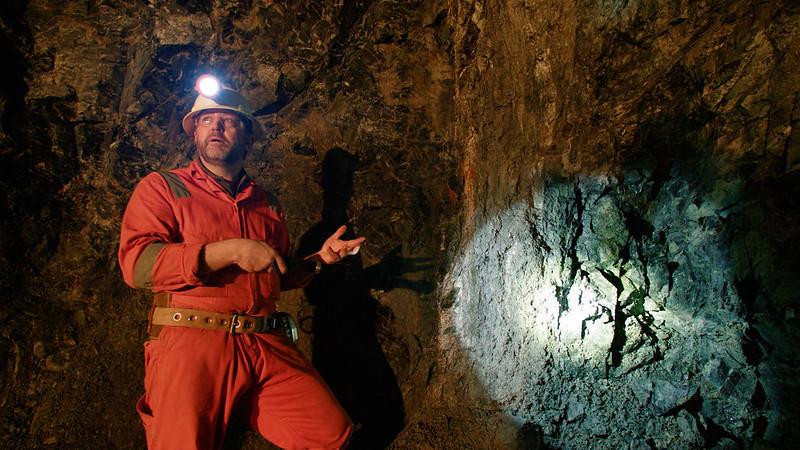
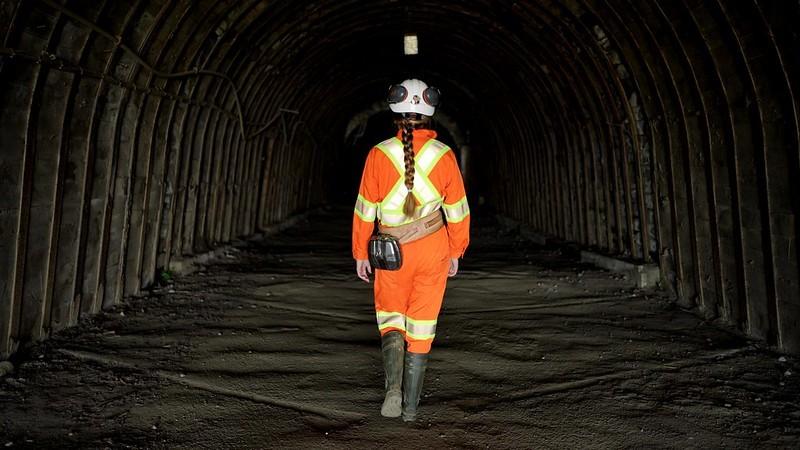
There is already talk of thousands of new jobs in Cornwall, a part of the world where tin, lithium and tungsten can and are being mined.
The strategy will see the Government work with the sector to harness the UK’s world-leading capability with Europe’s largest lithium deposit in Cornwall. In September the National Wealth Fund announced a £31 million commitment to Cornish Lithium to advance the Trelavour Lithium Project, at St Dennis, towards a construction decision and the Cross Lanes Geothermal Lithium Project, near Chacewater, to commercial drilling.
That is in a year which has also seen a £28.6m National Wealth Fund investment in Cornish Metals, which plans to reopen South Crofty mine in 2028. Tin is now seen as a valuable commodity once again and – like lithium – is used as a vital component in electronics, electric vehicles and renewable energy infrastructure.
Kernow Industrial Growth Fund
One positive in last week’s Budget was the introduction of a new £30 million Kernow Industrial Growth Fund, which will be passed to Cornwall Council to invest in areas such as critical minerals, renewable energy and marine innovation over the next two financial years.
On its announcement, Noah Law, Labour MP for St Austell and Newquay and a former economist, said: “This Government is driving millions of pounds into Cornwall to reinstate its role as a powerhouse of industry – by supporting growth in multi-billion-pound sectors with global growth potential, such as critical minerals. We’ll be striving to ensure the maximum spoils of those industries stays within Cornwall.
“This is also about ‘righting the wrongs of the past’ where the previous Government presided over years of unfair and inequitable treatment; treating Cornwall as little more than a ‘picture postcard’ destination. That ends now.”
However, there’s a caveat. Although a different type of more targeted financial aid, the new growth fund will largely replace the Shared Prosperity Fund, which comes to an end in March and was significantly larger than this new raft of funding.
This means the call for fairer funding for Cornwall from Westminster is still ongoing from all politicians in the Duchy. Cornwall’s politicians have long said that urban areas are favoured over rural areas, like Cornwall, when it comes to the necessary funding for adult social care, children’s care, school transport and housing – all areas which are constantly depleting the coffers at Cornwall Council.
Some Labour MPs have told me they are hopeful Cornwall will be seen in a more favourable light when it comes to future local government funding. We shall see.
All mining eyes on Cornwall this week
Following last week’s announcements, all industrial eyes will be on Resourcing Tomorrow this week – Europe’s biggest and most influential mining event, which is taking place in London on Tuesday to Thursday.
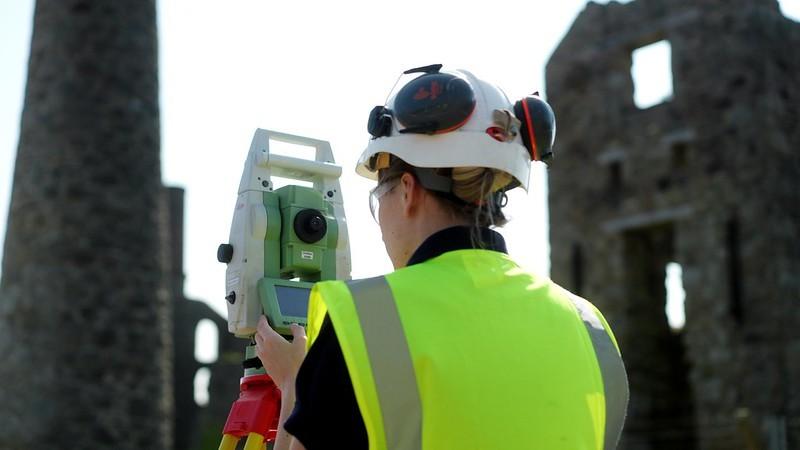
A delegation from Cornwall will showcase the region’s depth of mining resources, its world-leading mining expertise and emerging opportunities that exist to harness both geothermal power and critical minerals from our unique geology.
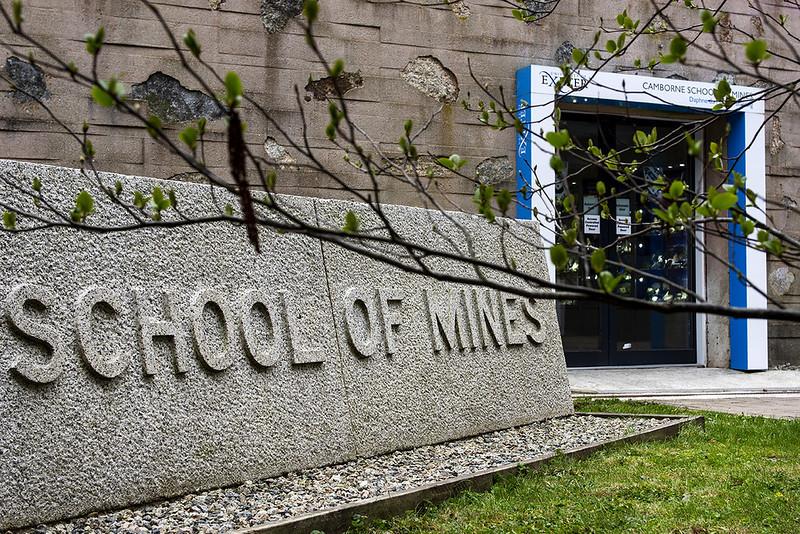
Flying the flag for the county will be a delegation led by Cornwall Trade and Investment and Cornwall Mining and Geo-Resource Alliance. Delegates on the stand include Cornish Lithium, Cornish Metals, Cornwall Resources, Cornish Tin, Paterson & Cooke, SLR Consulting, Geothermal Engineering Ltd and Neo Geo Consulting. The University of Exeter’s Camborne School of Mines will also be exhibiting at the event.
Geothermal power
New for this year at the event, experts and industry leaders will highlight Cornwall’s significant potential for deep geothermal power production and the part this has to play in meeting the UK’s future energy needs.
Ola Zawalna, strategic and business manager for the Cornwall Mining and Geo-resource Alliance, said: “Cornwall is developing pioneering projects to generate heat, cooling and electricity alongside lithium extraction and geothermal energy to power mining and processing operations.”
With the potential to deliver thousands of future jobs, greater domestic energy security and heat for local homes and industry as a bi-product, Cornwall is pushing for geothermal energy to be championed, helping to secure investment in a similar way to the US where big tech companies such as Google are now partnering with developers to achieve geothermal energy at pace.
Caroline Carrol, senior trade and investment manager at Cornwall Trade and Investment, added: “Geothermal energy also has the benefit of providing increased access to critical minerals that are pivotal to energy transition, including lithium extracted from brines. This is a process that is being pioneered by Cornish Lithium and separately by Geothermal Engineering Ltd at its United Downs Deep Geothermal Power project, which is set to become the UK’s first to generate electricity alongside lithium extraction.”
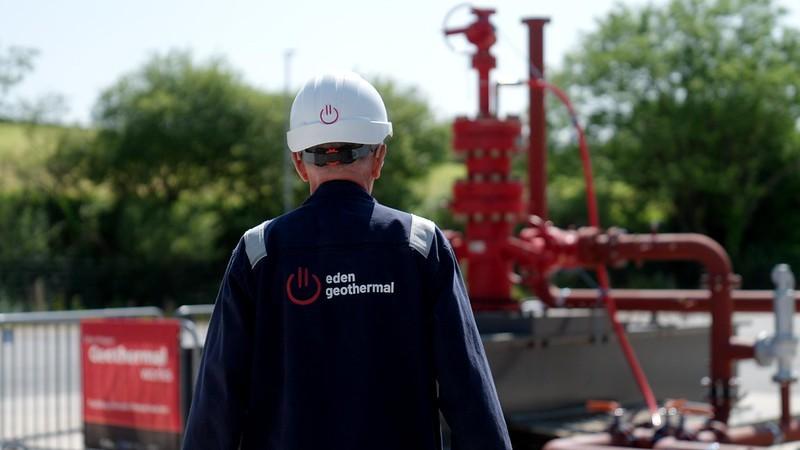
Let’s not forget the Eden Geothermal Energy Project, which is providing heat to the Eden Project’s Rainforest and Mediterranean biomes and new state-of-the-art plant nursery.
Future economic and business opportunities in Cornwall
As well as all the talk about critical minerals, there is the huge potential for floating offshore wind development in the Celtic Sea and the economic boon that could provide for Cornwall via Celtic Sea Power, a Cornwall Council company.
As part of the growth in offshore wind, Falmouth Docks is waiting for permission for a £150 million redevelopment which is poised to create hundreds of jobs, support homegrown clean energy and unleash economic growth across not just Cornwall but the whole of the South West.
Then there are the range of green industries, tech companies and sustainable tourism ventures which are looking to the future in Cornwall.
Chamber of Commerce boss John Brown told me: “Lithium, critical minerals, geothermal, floating offshore wind are all great opportunities, but our agricultural community is first rate too – we feed the nation.
“I’m seeing innovation there, whether it’s looking at more regenerative ways of farming or looking at how they’re able to get more from the land by doing less harm, and that includes some of our fishing communities as well.
“Our creative industry is exceptional, especially in creative tech and the work that we’re doing in AI and development, and that is something that we can export around the world tomorrow. We also provide world-class hospitality and food and drink.
“I know for a fact that we have got foreign investors from all the way around the world, from the Middle East to South East Asia, who are coming here looking at what we’re doing in sustainable tourism, in hospitality and food and drink, and seeing the incredible examples of this and are wanting to replicate it.”
Devolution
Also last week came the news that the Government will work with Cornwall Council and the Duchy’s MPs towards Cornwall becoming a single authority under the new Devolution Bill plans, effectively meaning no Devonwall combined authority and no mayor.
In a letter to Cornwall Council’s Liberal Democrat leader Cllr Leigh Frost, Communities Secretary Steve Reed MP said the Government recognises “the strong enthusiasm in Cornwall for devolution and the benefits it provides.
“The Government is minded, on an exceptional basis, to work with you to explore designating the council as a Single Foundation Strategic Authority”.
Since coming to power in May, Cllr Frost has championed a Cornwall-only deal that works for Cornwall as have the four Labour MPs and two Lib Dem MPs.
He gave a cautious welcome to the news: “People don’t realise that we’re one of the most devolved councils out there already. A lot of this conversation is not about councils getting more than Cornwall, it’s about councils getting what Cornwall already has.
“We’ve got most of it already, it’s about not missing out on what comes next. It’s a great step forward, it’s really positive news that the Government has committed to do this, but it’s massively caveated – there’s loads of detail to come.”
North Cornwall Lib Dem MP Ben Maguire is now calling for a fully-elected Cornish Assembly, describing the Government’s confirmation of a bespoke devolution deal for Cornwall as an “important first step” towards genuine local self-government and self-determination.
Mebyon Kernow – the Party for Cornwall leader Cllr Dick Cole is also keen for more power for Cornwall: “Let us celebrate that the threat of Devonwall is no more, but the challenge to secure meaningful devolution must continue. Now is the time that we must redouble our efforts to also secure parity with Scotland and Wales through a meaningful Celtic-style devolution settlement.”
On the apparent boost to Cornwall’s fortunes, Cllr Frost added: “We’ve got some real unique opportunities, particularly around critical minerals and Celtic offshore wind. Now’s the time to get that going and the Industrial Growth Fund, which is aligned to the Critical Minerals Strategy, works perfectly for us.
“I think this is the start of something. It just shows what you can achieve when the council and all six MPs line up together and speak with a unified voice. Someone said to me it feels like the first time it’s ever really happened when everyone is singing from the same hymn sheet.
“Party politics is party politics and we all have our own views, but when it comes to what’s best for Cornwall from Westminster we should all be working together and we have been to be fair.
“Any failures that have come from Westminster are not because our MPs didn’t work hard enough to have their voices heard.”
Cornish language boost
If all that wasn’t enough, Kernewek – the Cornish language – also received a boost last week.
The language, which was once classified as extinct, will now have the same status as the UK’s other Celtic languages – Welsh, Scottish Gaelic and Irish.
The Cornish language will be protected through part three of the European Charter for Regional or Minority Languages. Cornish had previously been covered by part two of the Charter and had been the only Celtic language in the UK not covered by the more extensive part three.
It’s often difficult to feel positive in Cornwall – we may live in the most beautiful part of the country, proud of our unique heritage, but we also live in an area blighted by poverty, deprivation, poor wages, unaffordable accommodation and a lack of opportunity.
So here’s to Cornwall on the rise. It looks like that Celtic tiger may be rousing and preparing to roar again … in Cornish.


Share