



Will the dredging of the harbour in Falmouth get the go ahead?
This is a burning question the port and town require answers to as it is evident that the docks need major investment and redevelopment for the future.
The jury is out on this important matter as the port awaits the final decision of Cornwall Council’s Strategic Planning meeting next month on whether to fully back the proposed £150m development of the docks or make recommendations to the Marine Management Organisation (MMO) reference the question of the type of dredging and safeguards to protect the oyster fishery and environment.
Recommended reading
-
Campaigners raise fresh concerns over Falmouth Docks dredging plans
-
OPINION: History of dredging in Falmouth and why it's integral to future of the docks
-
Anti-dredge campaigner denies trying to shut down Falmouth Docks during heated debate
-
Falmouth Town Council raises environmental concerns over dock redevelopment
-
Packed Falmouth meeting raises fears over docks dredging and fishing future
The “Stop the Dredge” campaign group is screening the film All Rivers Spill their Stories to the Sea at The Poly next month followed by campaign discussions on the Falmouth Docks dredging proposal.
The film follows Hartlepool fisherman Stan Rennie, who, like many fishermen in the area, claim their livelihoods have been ruined by dredging the River Tees.
Their business changed in October 2021 when thousands of crabs, lobsters and other crustaceans were washed up dead on the shore or found in fishing gear.
This devastating incident set the fishermen on a collision course with the various authorities and ultimately, and understandably, they blamed the dredging that had occurred on the Tees, which is home to many riverside industrial companies.
“Stop the Dredge” claim that the Hartlepool incident could happen to the oyster fishery and wildlife in the Fal and bay if dredging of contaminated spoil and dumping at sea is allowed without proper safeguards in place.
The environmental activists have omitted to say that separate investigations by eminent scientists into the crustacean mortalities in North East England during 2021 and 2022 found dredging was not to blame.
An independent expert panel investigating possible causes of mass mortality event affecting crustacean species in the north-east of England in autumn 2021 said: “The panel therefore considers it exceptionally unlikely that capital dredging on the Tees caused the unusual crustacean mortality seen in this region between these dates.”
The major investigative bodies Defra, CEFAS, Environment Agency and Marine Management Organisation concluded that a harmful algal bloom was the most significant factor while the Crustacean Mortality Expert Panel said in 2023 that a “novel, unidentified pathogen was the most likely culprit.”
These findings ultimately lead to conspiracy theories from fishermen and activists.
Scientists discovered the parasite bonamiasis in the Fal oysters in 1982 when, according to research, 90 per cent of the stock was wiped out.

The disease was also found in the same year at the Helford and Penryn sites.
Bonamiasis spread further along the coast to many south coast harbours.
The government banned the movement of oysters to combat the disease spreading further.
Across the water in France, food poisoning associated with eating raw oysters that have come from oyster farms, which are at the mercy of sewage outfalls after heavy rain, have been reported over many years.
Bonamiasis was found in French oysters in 1979 resulting in catastrophic losses in the oyster fisheries with a high mortality rate.
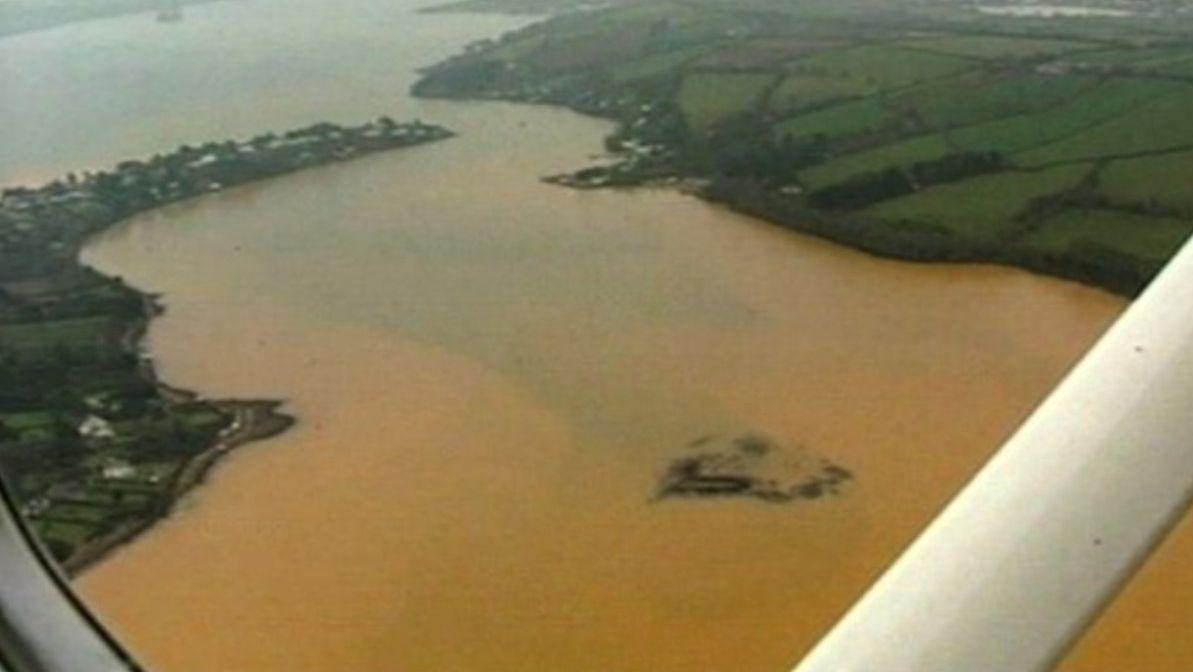
January 1992 saw one of the most damaging water pollution incidents in UK history when an adit, or underground tunnel, linked to the Wheal Jane tin mine flooded, sending 10 million gallons of highly toxic acidic water into the Carnon River and ultimately the River Fal.
A toxic plume of this contaminated water containing high levels of iron, zinc, copper, arsenic and cadmium turned the water to a rust orange colour as it meandered down past the famous Pandora pub into the area of the oyster beds.
There were no reports of damage to the oyster fishery.
Recommended reading
-
Man trapped under overturned quad bike on Lizard Peninsula rescued by fire crews
-
Nurse struck off after using five patients' records to obtain weight-loss drugs
-
‘Be Ready’ campaign urges households to prepare for emergencies after storms
-
11 Devon and Cornwall Police officers cleared over alleged fake keyboard activity
Following an email I sent to the MMO some months ago I had this response reference dredging:
“For the local Oyster Fishery concerns, the MMO consulted with the Cefas Shellfisheries Team. No concerns were raised, considering the project design of backhoe and closed bucket dredging, to contain as much sediment as possible.
"Further project design, such as only dredging on certain tides would also help to contain the sediment and prevent sediment plumes.
"Monitoring would be in place, and further sampling would have to take place throughout the project, to ensure that only sediment containing certain levels of contaminants would be able to be disposed of at sea, in the specific disposal site outside of the Falmouth Harbour area.
"Other potentially more contaminated sediments would be transported on land for treatment and on-land disposal. (Please note, the planning permission for the land-based activities is under the remit of Cornwall Council, under reference PA25/01598.)”
“Stop the Dredge” claims it supports the docks to be redeveloped without dredging.
The organisation is against mega cruiseships calling here due to the proposed increase in the number of ships, air pollution, traffic congestion, and with the town being swamped by cruise passengers.
Many claim that cruiseships do not inject much revenue into the town’s economy, which in my opinion is utter rubbish.
Ports all around the UK report good revenue streams from these ships.
On the question of mega cruiseships berthing alongside the docks cruise terminal in the future, environmental activist and former Falmouth town councillor Zoe Young, a tour guide with links to Extinction Rebellion, added in a Guardian newspaper article on Falmouth: “A terminal for stinky great ships to meet stinky coaches to Land’s End — is that the best we can hope for?”
Falmouth is the gateway to Cornwall as far as cruiseships are concerned and whether or not cruise passengers decide to go on excursions or stroll around town is not a great concern as it drives regional economic development.
Others compare Falmouth with Southampton regarding air pollution from cruiseships.
Southampton attracts three million passengers annually with 500 plus cruiseship calls against Falmouth’s 50, half of which this year anchored offshore.

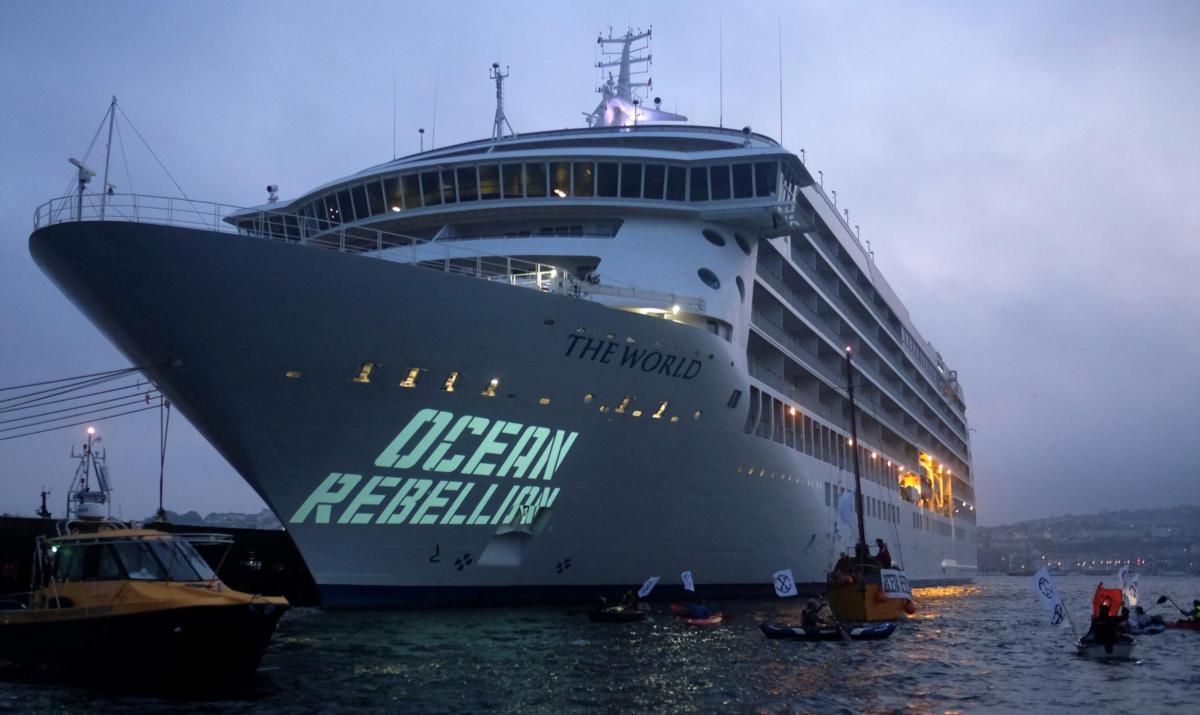
In 2020 Ocean Rebellion, an offshoot of Extinction Rebellion, projected films, slogans and messages, including “Turn the Tide” and “ **** this ship”, on the hull of the residential cruise ship The World berthed at the Docks.
Such behaviour does nothing for their campaign.
Sky News last week claimed that some younger members of Extinction Rebellion had left the organisation and changed their minds about public disruption due to legislation being introduced by the government for disruptive protest, which included heavy fines and jail terms for those breaking the law.


Share